4 TB M.2 SSD.

At that time, C60 or, better still, C90 cassettes were used for recording. Later, when the first SDR receivers appeared, the “hard drive” could not be large enough. Nowadays, these mechanically vulnerable, relatively slow but cheap HDD disks are being replaced by affordable SSD storage. That’s why my station computer is now getting a Samsung 990 PRO NVMe M.2 SSD with 4 terabytes of storage and sequential read/write speeds of up to 7,450 MB/s and 6,900 MB/s, respectively, to massively speed up the large amounts of data involved in recording and listening to the mediumwave band. The two additional 8 TB HDDs will continue to be used for archiving.

Panama.

In recent days, there have been repeated good signals from South and Central America, even though the sun is not playing along in the mediumwave band at the moment. This morning, I was able to hear Radio Adventista on 1560 kHz and BBN Radio on 1350 kHz, both from Panama, in Salzburg. AziLoop, 270°.

The second QSL from Okinawa.

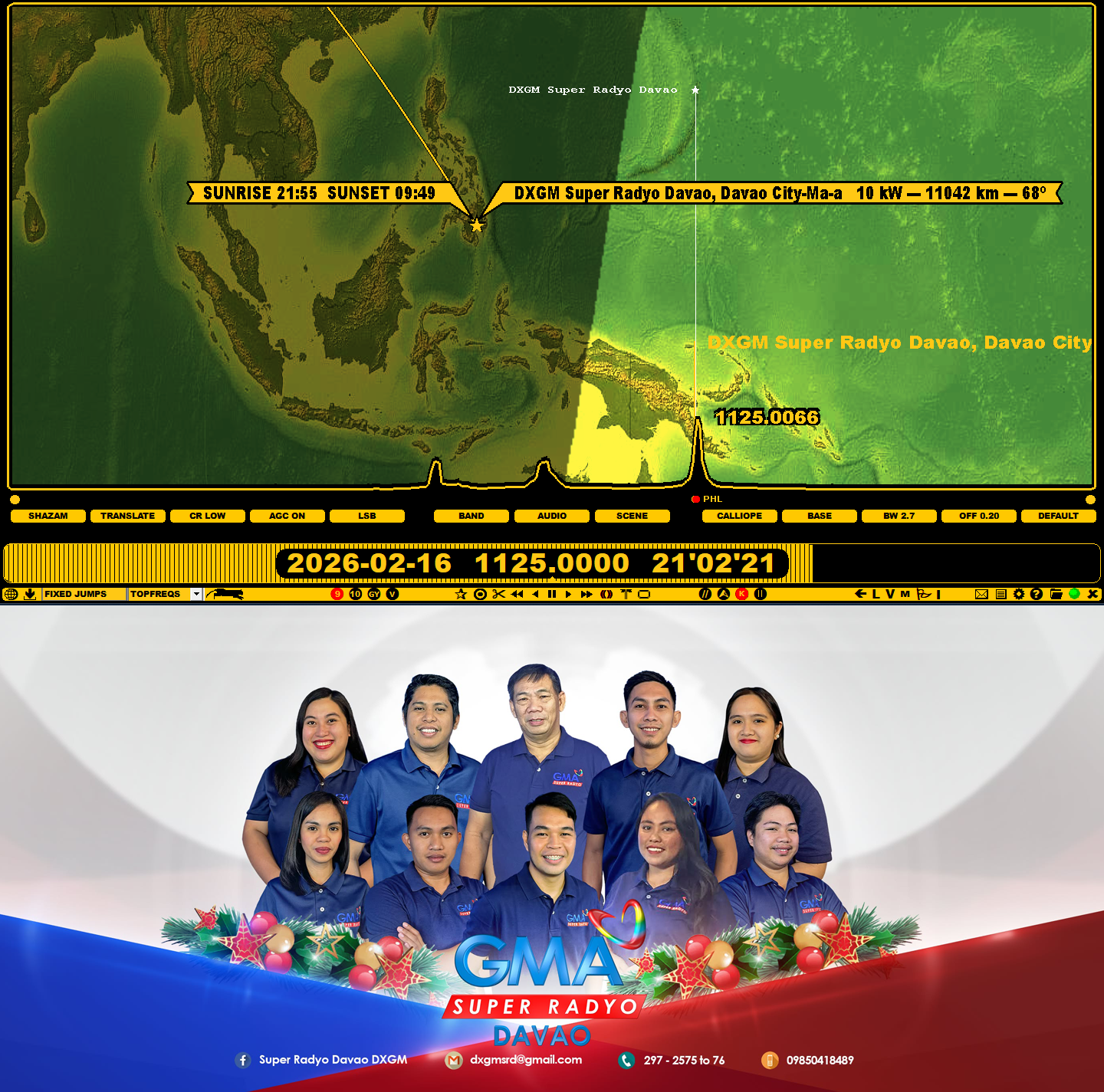
The mediumwave station NHK 2 Okinawa in Tomisiro City confirmed today by post that it had received their morning broadcast on 1125 kHz. This means that I now have mediumwave confirmation of reception from the Ryūkyū Islands in the Pacific both at the end of the evening broadcast and at the start of the early morning broadcast.

Panama.

Early this morning, 17 November 2025, Radio Adventista from Panama could be heard on mediumwave 1560 kHz in Salzburg. The station broadcasts from Llano Bonito, a corregimiento in the district of Chitré, Herrera province, with a population of 9,798. Since 2012, Panama has been divided into a total of 693 of these corregimientos.

South Africa.

Radio Islam from Lenasia can received around 22 UT here in Salzburg on my 145° Beverage on 1548 kHz. Radio Islam’s offset is very stable at 1547.990. The Greek station makes it very difficult. But what free channel isn’t occupied by a Greek station these days? Terrible.

Caribbean.

Beautiful mediumwave signals from the Caribbean after midnight: PEF Canal 1 from Madeira on 1530, Caribbean Radio Lighthouse on 1160, Harbour Light of the Windwards on 1400 and Radio Monumental from Ecuador could be heard in Salzburg around 23 UT. ZNS1 National Voice, Nassau, Bahamas, was also heard on 1540 around 2325 UT. AziLoop, 270°.

Emisora Voces Rovirenses.

A few days ago, I was able to hear the Colombian station Emisora Voces Rovirenses from Málaga here in Salzburg on medium wave 1560 kHz. Málaga is located east of Santander and is the capital of the province of García Rovira. The city lies at an altitude of 2200 metres in the eastern cordillera of the Colombian Andes. The station has now confirmed reception.

Japan.

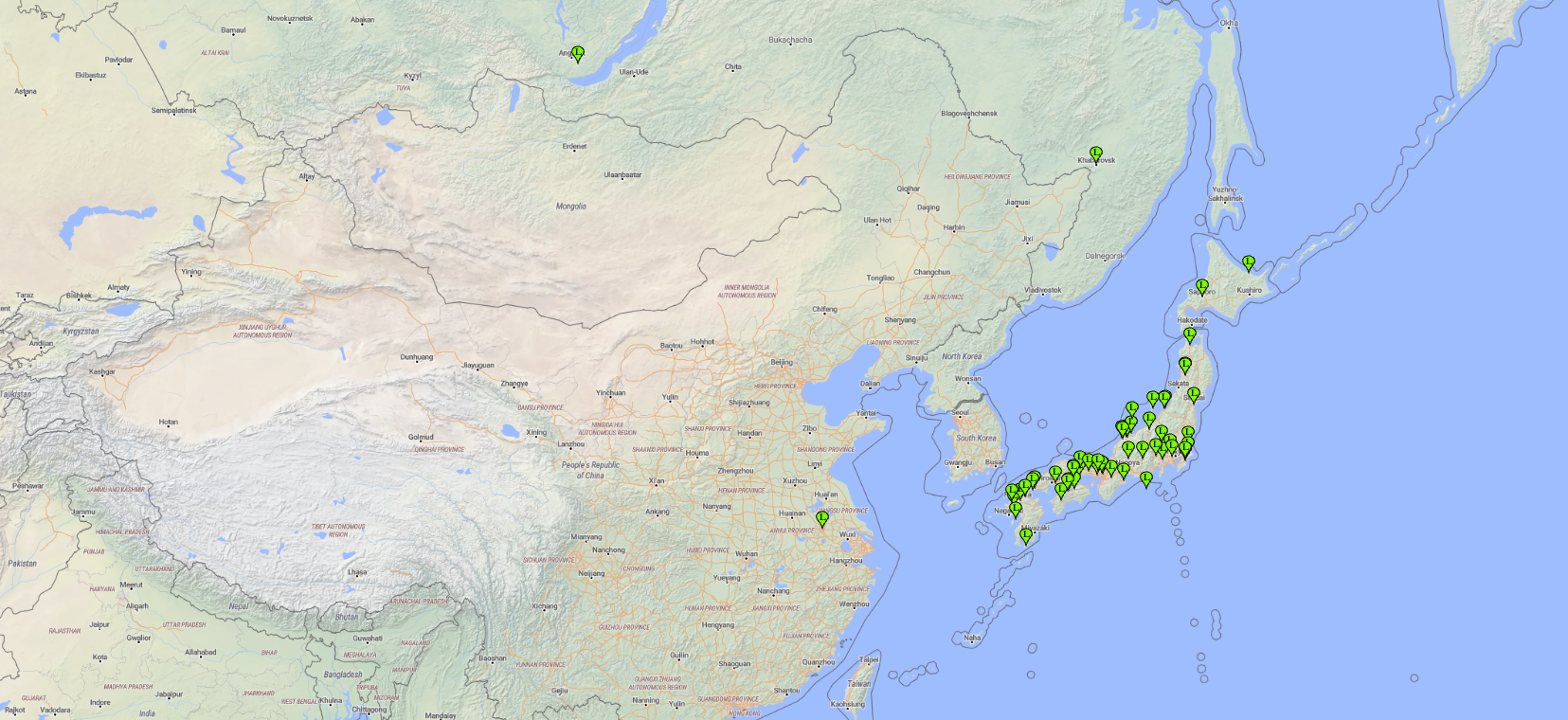
Signals from Japan have been heard repeatedly in recent weeks, albeit mostly at low signal strength here in Central Europe. A good opportunity to hear NHK-2 stations is when broadcasting begins at around 20:55 UTC. At this time, all NHK-2 stations play the bright chimes of the ‘Musicbox’. Unfortunately, NHK no longer confirms reports. Here is my log from 20 October 2025. AziLoop, 40°.

774 2054 J JOUB NHK Radio 2, Akita (toh-aki) 8931 km
828 2054 J JOBB NHK Radio 2, Osaka/Habikino (kns-osk) 9214 km
873 2051 J JOGB NHK Radio 2, Kumamoto (kyu-kum) 9107 km
1017 2053 J JOLB NHK Radio 2, Fukuoka (kyu-fuk) 9029 km
1125 2051 J JOAD NHK Radio 2, Naha/Tomigusuku (kyu-oki) 9519 km
1134 1635 J JOQR NCB Bunka Hoso, Tokyo/Kawaguchi (kan-tok) 9308 km
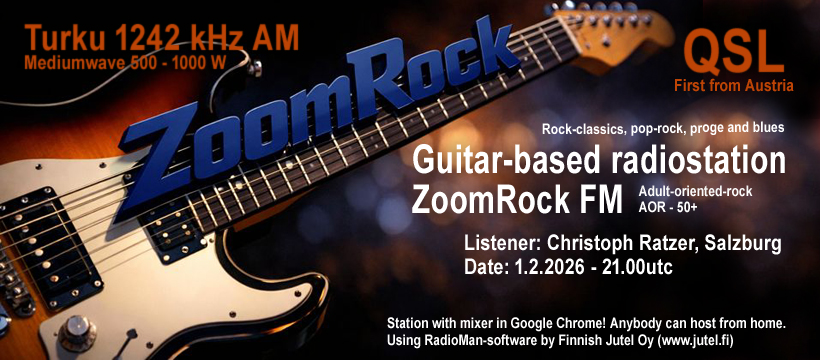
1242 2055 J JOLF NBS Nippon Hoso, Tokyo/Kisarazu (kan-tok) 9359 km
1350 2059 J JOER RCC Chugoku Hoso, Etajima/Okimi (chg-hir) 9072 km

China.

This afternoon, October 17, 2025, Guangxi GD Jingji Guangbo from China could be heard on the mediumwave band. The station, broadcasting on 1224 kHz from Nanning, the capital of the Guangxi Zhuang Autonomous Region in the south of the People’s Republic of China, could be heard at around 16.00 UT in Salzburg on my AziLoop antenna (60°).