Summer.
Reply
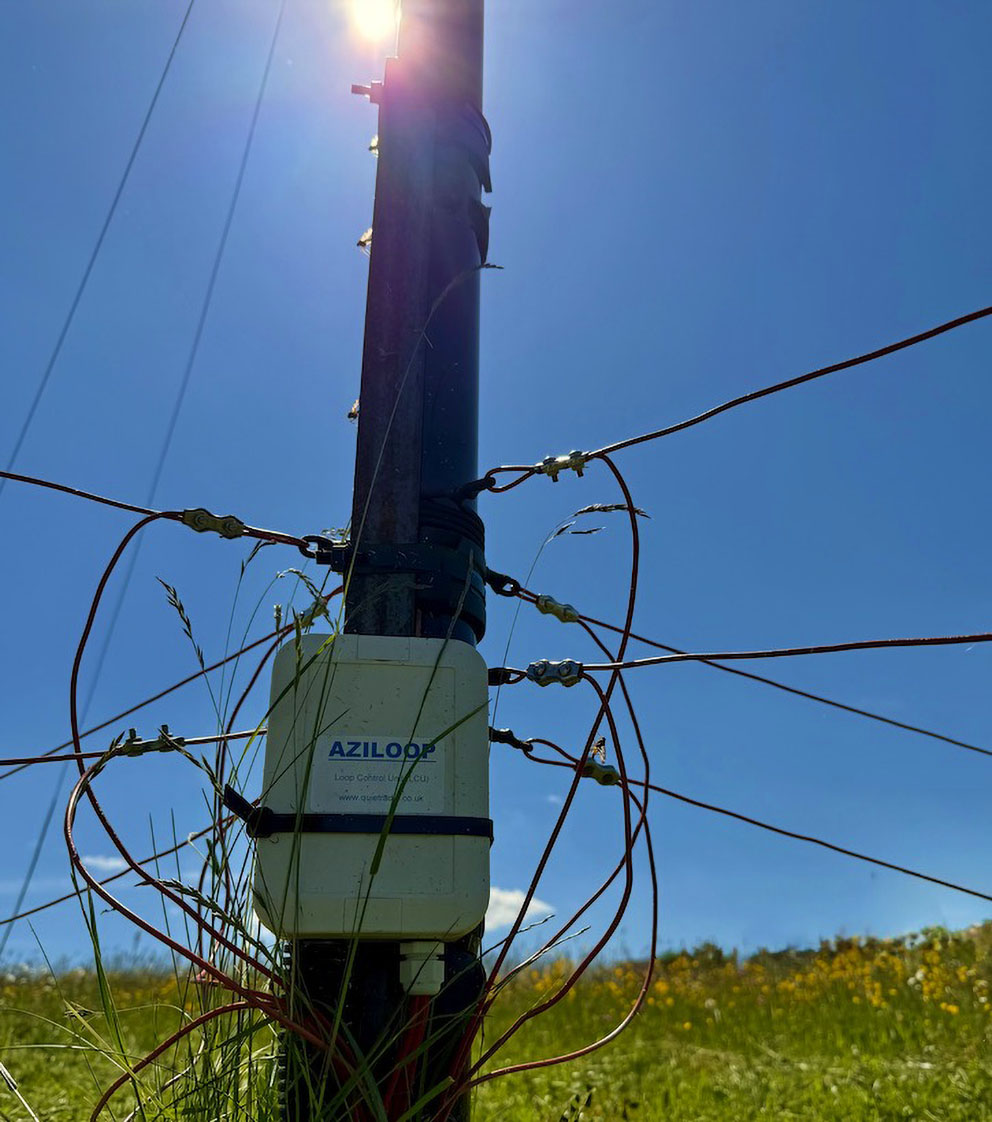
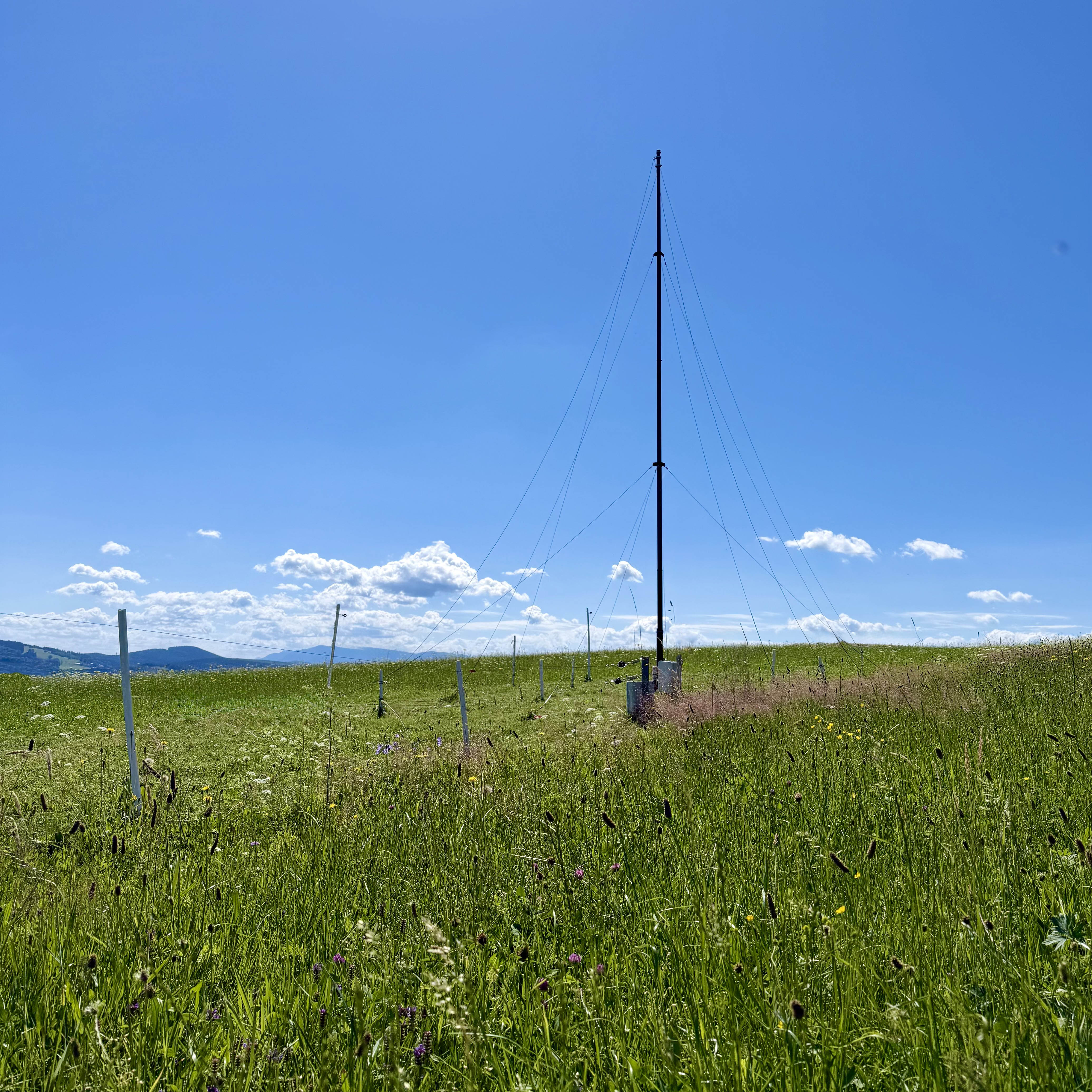
I’ve been using the AziLoop system for almost a year now, and the antenna has proven itself to be excellent in terms of its versatility and reception performance. The small server runs 24/7, uses very little power and is always accessible online via the network; the timer switches the antenna on in the evening, tuning in to Asia first and then South America later in the evening. Early in the morning, the system switches off completely and grounds the antenna. My perfect partner for reception on mediumwave and on 160 metres.
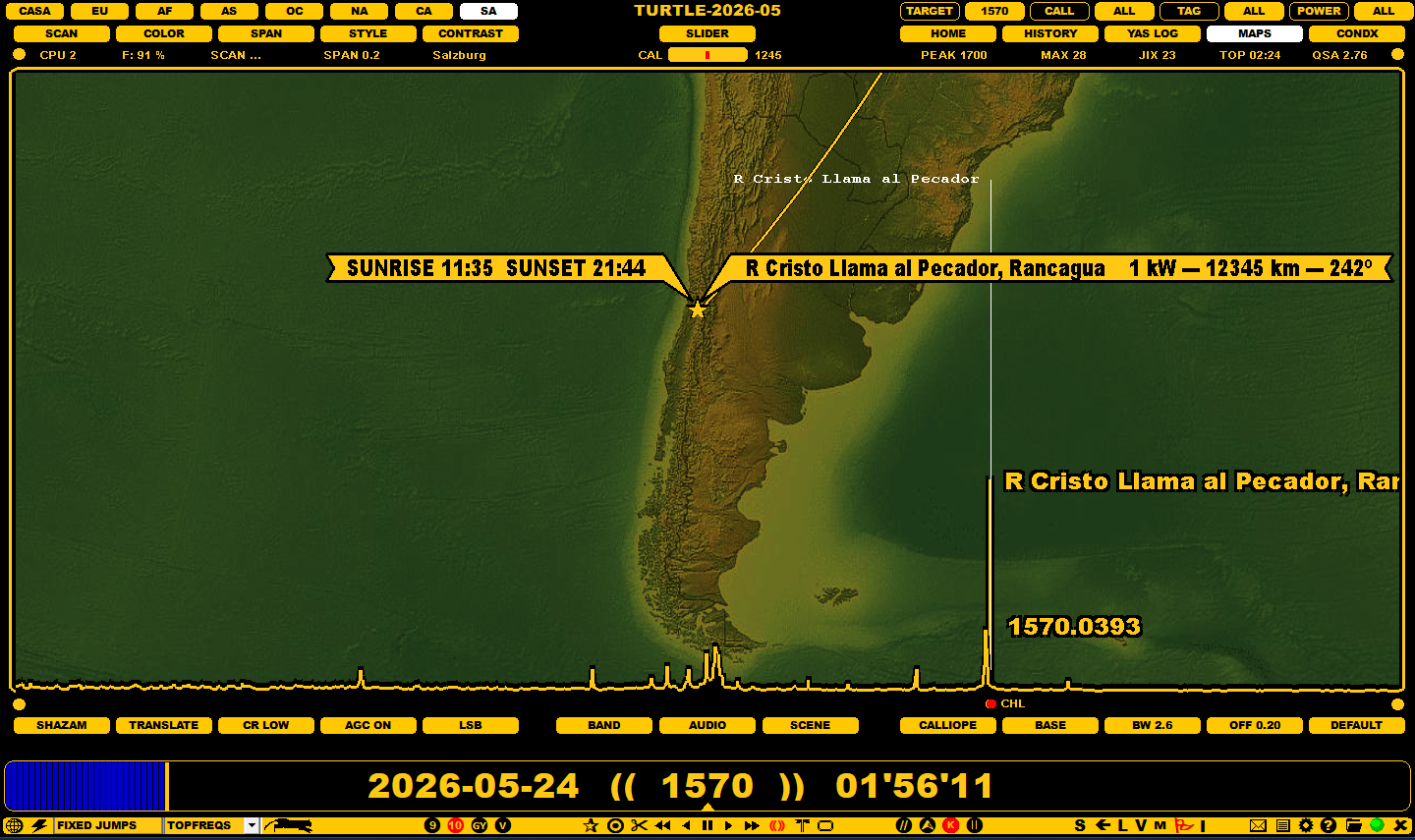
One of the ‘difficult’ mediumwave DX targets here in Austria is Chile. First and foremost, because the few stations there share the frequencies with other transmitters from South America and use relatively low transmission power. On top of that, I haven’t had a good South American antenna in recent years with which I could go ‘hunting’ for Chile during the best possible reception period in spring. By setting up my AziLoop antenna, which can be rotated 360° electronically, I was finally able to make a serious attempt at this major target this spring.
In fact, there are only two stations: Radio Festival on 1270 kHz, a long-established station from Viña del Mar, also known as ‘La Radio en Colores de Chile’. Unfortunately, Radio Provincia from La Plata also broadcasts on the same frequency, and always offers a much stronger signal from almost the same direction. The second option for receiving Chile here in Austria is Radio Cristo llama al Pecador on 1570 kHz from Rancagua, the capital of the Región del Libertador General Bernardo O’Higgins. However, Radio Carraviz from Juliaca in southern Peru also broadcasts on 1570 – and this station can very often be received strongly in Salzburg.
Nevertheless, this frequency seemed the most worthwhile to me, partly because the offset of Radio Cristo llama al Pecador, at 1570.039, is a considerable distance from the Radio Carraviz signal and is therefore clearly visible in the waterfall display of the SDR software. I have now been tracking the signal closely for many days; it was easy to see, but the audio was very difficult to make out. Here we must thank the developers of the specialist mediumwave programmes Jaguar and WavViewDX; without their help, one would never be able to see and hear such weak signals in the mediumwave band with this clarity!
Last Sunday, after 01:30 UT, the signals from Argentina were stronger than those from Peru further north, making the search worthwhile. Finally, at 01:52 UT, the signal from Rancagua in Chile was stronger than the Peruvian one on the same frequency for two minutes. And although I don’t usually use the stations’ audio streams for comparison, it paid off here – exactly the same folk music was being played in the stream! Even though I didn’t hear a station announcement, it was clear that the signal on 1570 kHz had come from Chile.
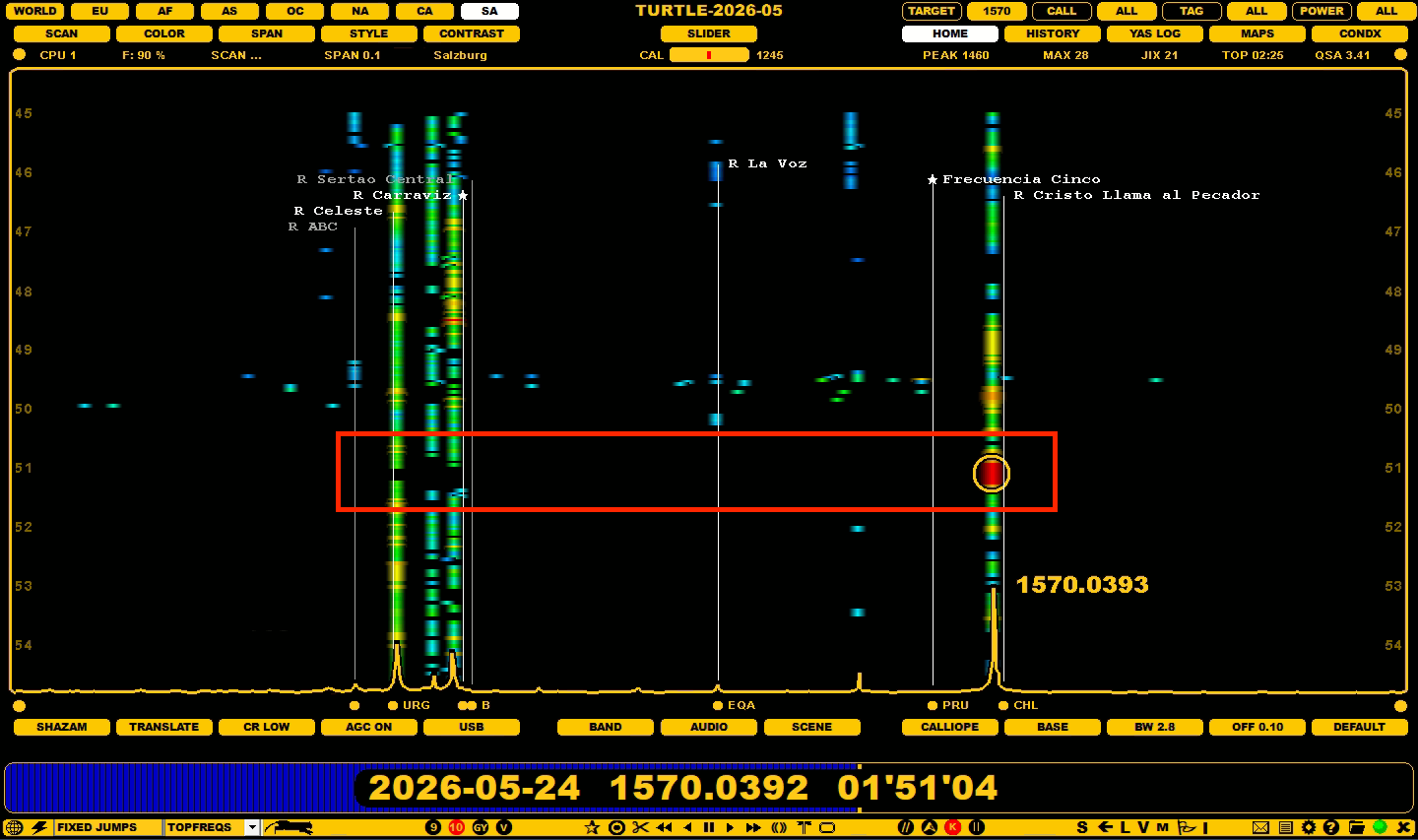
Thanks to the help of Thomas Nilsson and Hans Ostnell from the Arctic Radio Club, I was able to make contact with Pastor Angel Arenas Montecinos, who confirmed the reception:
Bendiciones señor Ratzer.
Le cuento que si es nuestra radio 1570 am de aquí de rancagua sexta region de nuestro país chile .Y le agradezco por darnos esta alegría a nosotros de saber que tan lejos se esté escuchando nuestra señal.
Un abrazo grande y muchas bendiciones.
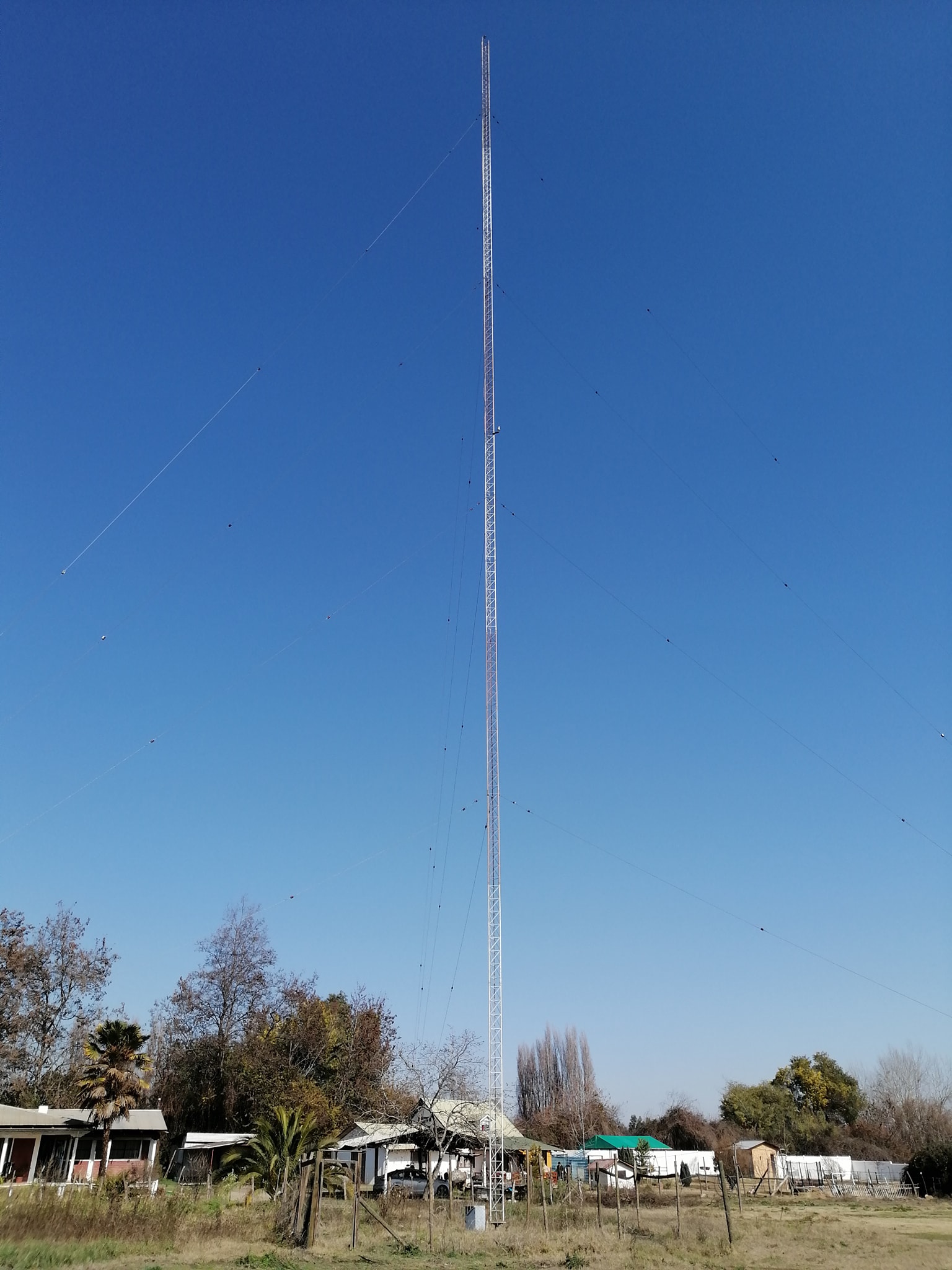
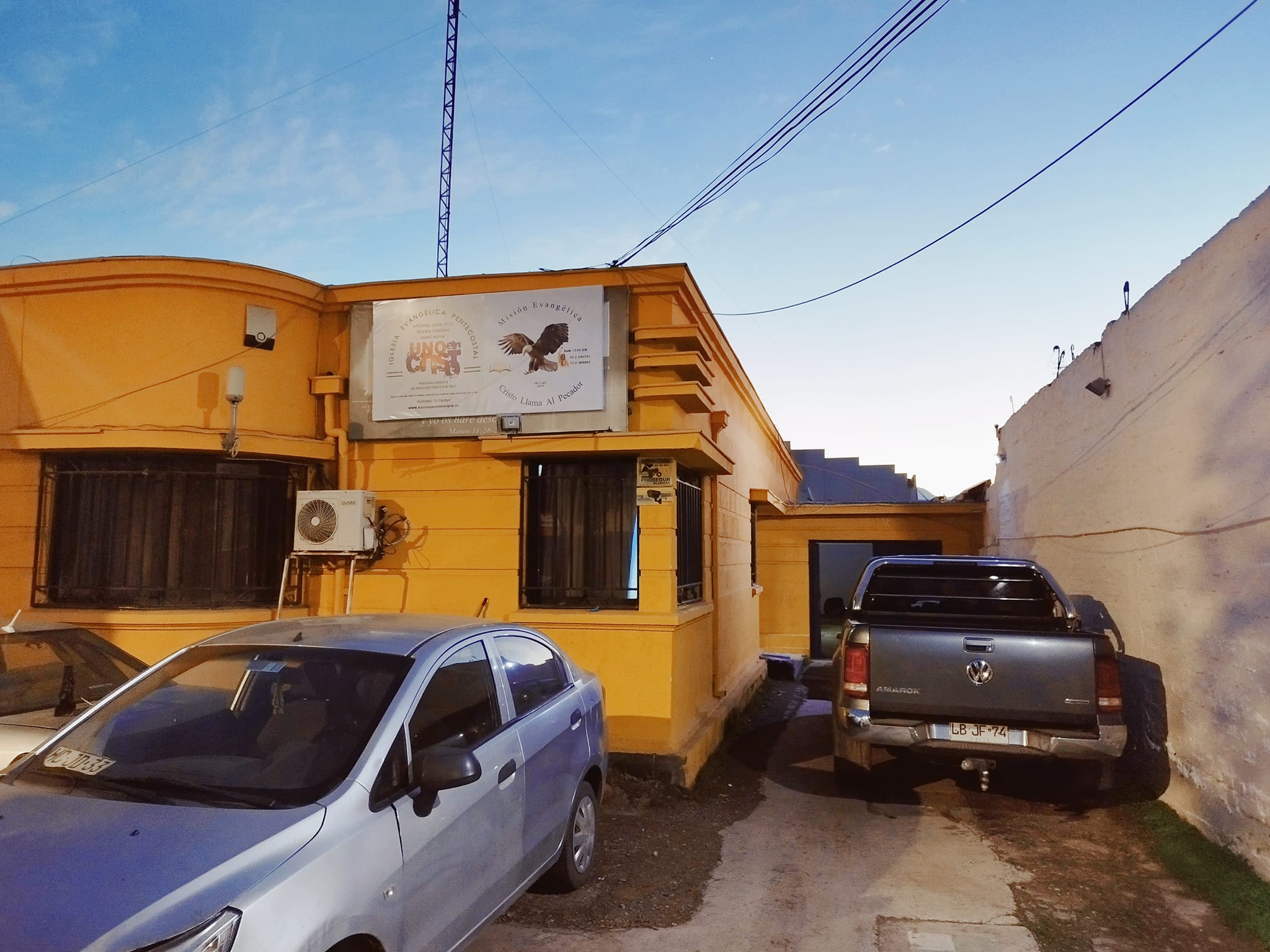
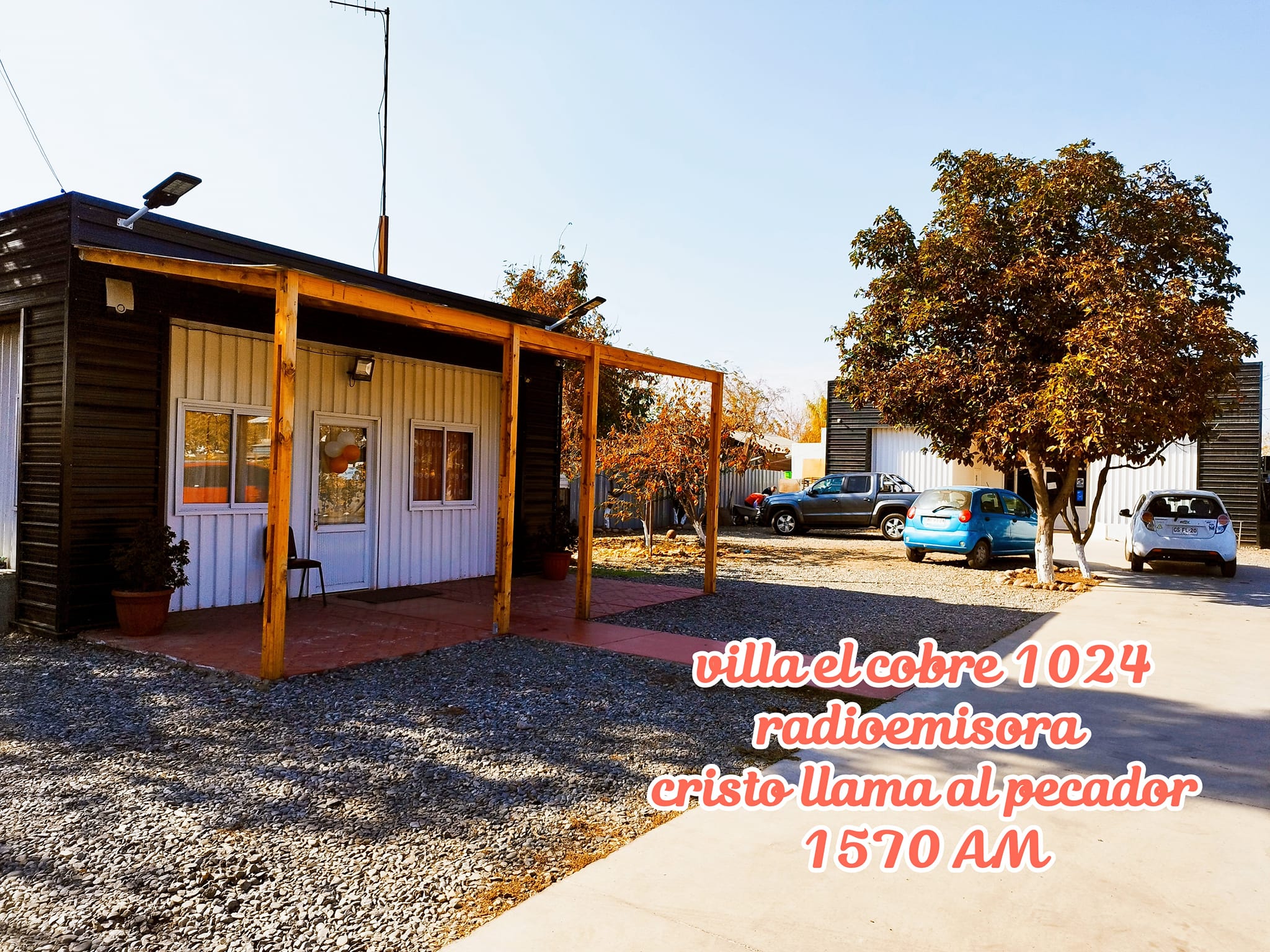
English translation:
God’s blessings, Mr Ratzer.
I would like to inform you that this is our radio station 1570 AM here in Rancagua in the Sixth Region of our country, Chile. And I thank you for giving us this joy of discovering how far our signal can be received.
A warm hug and God’s blessings.
Such wonderful confirmation is the reward for all the work at the station, for the many hours spent trying to improve the reception equipment in the hope of perhaps making mediumwave signals from other continents more audible. And such a rare reception is also motivation to listen again every day and find new stations. Our very special hobby can be so wonderful!
73, Christoph Ratzer
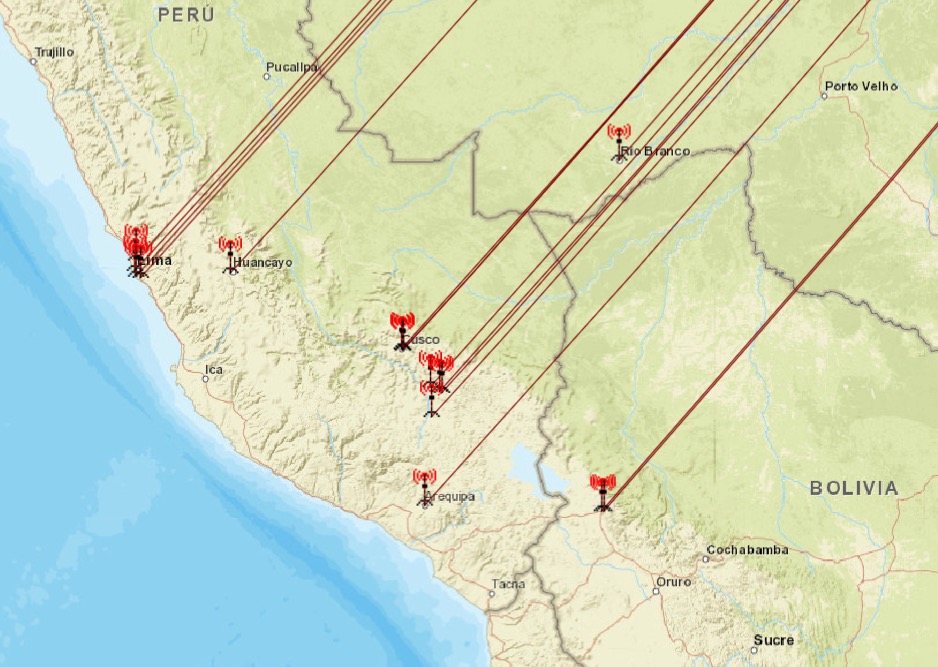
Over the last few days, we’ve been able to pick up some lovely early-summer mediumwave signals from South America. The thunderstorms have spared us so far, so it’s a pleasure to listen in, even if the signals aren’t always very loud.
920 0015 PRG Radio Nacional del Paraguay AM, Asuncion 10742 km
930 0245 PRU Moderna Radio Papa, Lima 11017 km
1020 0240 PRU Radio Kinsachata, Espinar/Yauri 10818 km
1110 0244 PRU Radio Feliz, Lima/Puente Piedra 10992 km
1160 0235 PRU Radio Maranatha Huancayo, Huancayo 10878 km
1220 0250 PRU Radio Melodia AM, Arequipa 10959 km
1240 0008 PRU Radio Pachatusan, Sicuani 10767 km
1360 0010 PRU Radio Sicuani, Sicuani 10768 km
1380 0245 B Radio Deus È Amor, Recife 7800 km
1400 0300 B Radio Difusora Acreana, Rio Branco 10162 km
1430 0250 PRU RPP Noticias, Cusco 10754 km
1440 0250 PRU Radio Imperial 2, Lima/Cerro Papa 11011 km
1490 0300 PRU Radio Dios es Amor, Cusco 10754 km
1500 0300 PRU Radio Santa Rosa, Lima 11010 km
1540 0005 BOL Radio Bendita Trinidad, El Alto 10727 km
1560 0301 PRU Radio MarÌa, Wanchaq 10755 km
1560 0015 BOL Radio Luz del Mundo, La Paz 10723 km
1570 0254 PRU Radio Tupac Amaru, Yanaoca, 10800 km
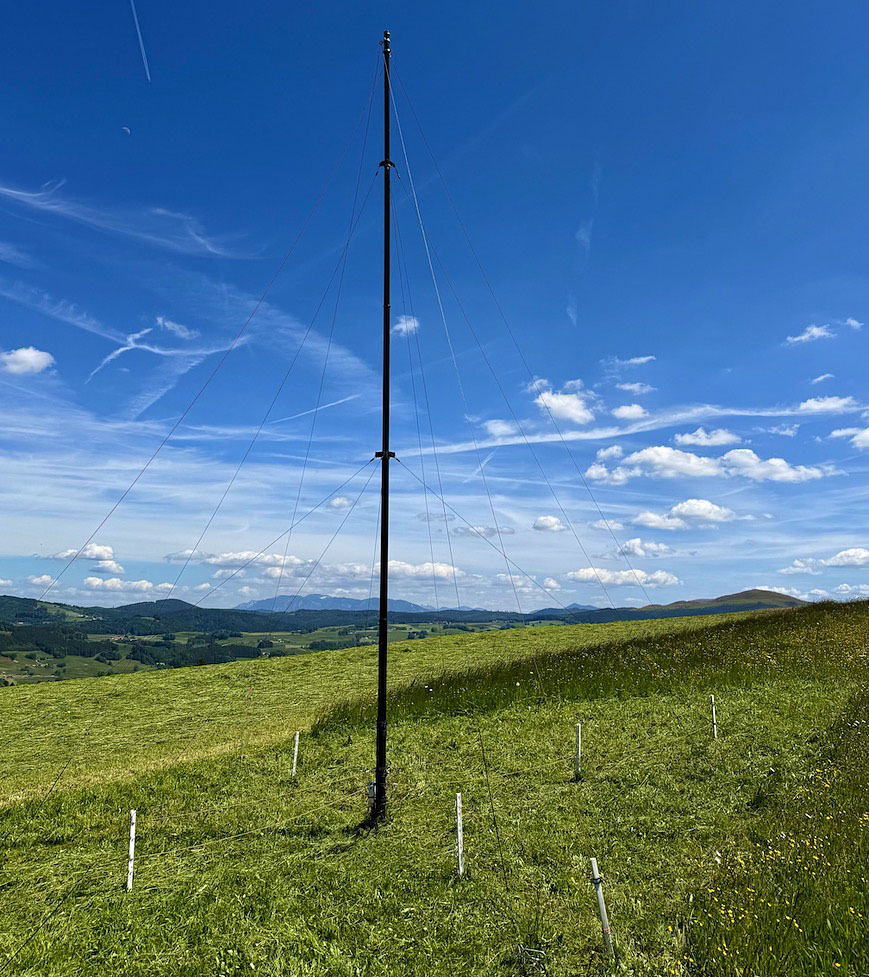
Over the summer, I’m only using the reliable AziLoop antenna; all my other antennas are switched off completely for the first time and have been unplugged as well – given my exposed location, I want to minimise the risk of power surges and lightning strikes causing any disruption.
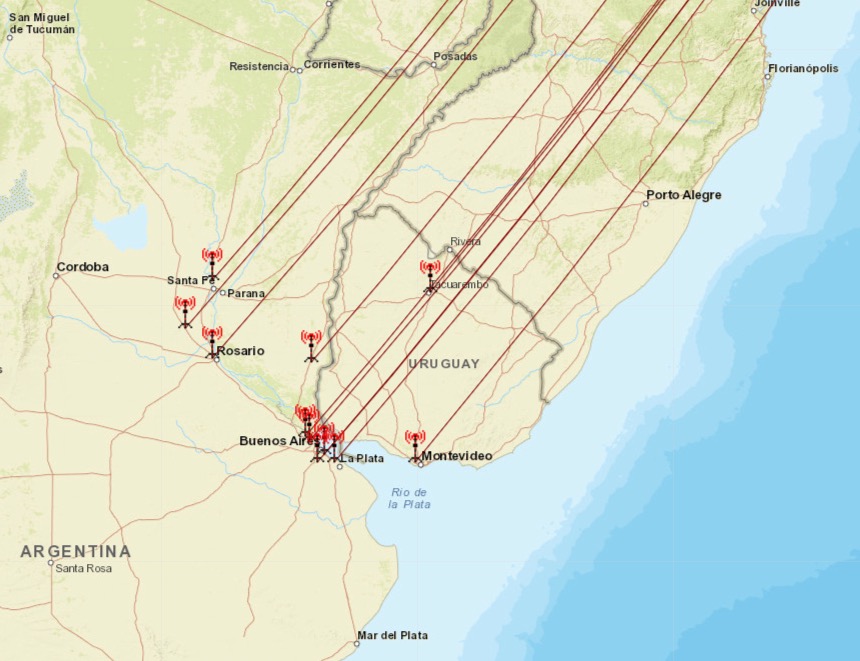
No particularly strong signals, but southern South America can be heard on the medium-wave band almost every day here in Salzburg.
870 0130 ARG Radio Nacional, Buenos Aires/General Pacheco (df) 11591 km
920 0030 PRG Radio Nacional del Paraguay AM, Nueva Asuncion (phy) 10742 km
930 0043 URG Radio Monte Carlo, Montevideo (mo) 11485 km
1070 0030 ARG El Destape Mundo, Wilde (ba) 11592 km
1110 0010 ARG Radio Ciudad, Buenos Aires (df) 11590 km
1150 0110 ARG LT9 La Nueva 9, Sauce Viejo (sf) 11473 km
1230 0030 ARG Radio Dos, Rosario (sf) 11595 km
1270 0000 ARG Radio Provincia de Buenos Aires, La Plata (ba) 11591 km
1310 0040 ARG Radio Nacional, Gualeguaych˙ (er) 11468 km
1350 0000 ARG Radio Buenos Aires, Buenos Aires (ba) 11612 km
1400 0015 URG Radio Zorrilla de San MartÌn, Tacuarembó (ta) 11200 km
1550 0030 ARG Radio San Genaro, San Genaro Norte (sf) 11586 km
AziLoop, 26 mt. Loop
Perseus/Jaguar/WavViewDX
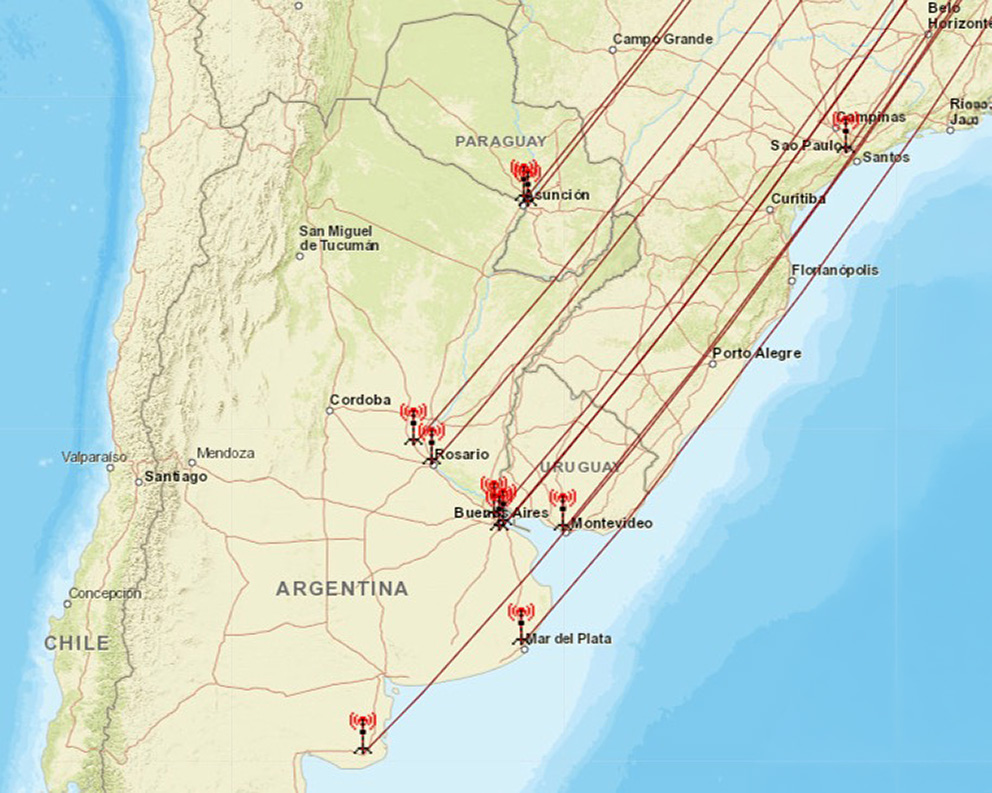
Signals from South America can be heard from time to time on the medium-wave band, though they are usually not very loud. However, the absence of thunderstorms is helping to ensure good reception.
740 0030 B Radio Sociedade da Bahia, Salvador/Ilha de Itaparica (BA) 8471 km
760 0004 ARG Radio Atlantica, Mar del Plata (ba) 11828 km
870 0030 ARG Radio Nacional, Buenos Aires/General Pacheco (df) 11591 km
920 0125 PRG Radio Nacional del Paraguay AM, Nueva Asuncion (phy) 10742 km
930 0003 URG Radio Monte Carlo, Montevideo (mo) 11485 km
1020 0128 PRG Radio Nanduti, San Lorenzo (cet) 10745 km
1070 0030 ARG El Destape Mundo, Wilde (ba) 11592 km
1150 0200 ARG Radio Nacional, Viedma (rn) 12374 km
1200 0330 B Radio Cultura Brasil, Sao Paulo (SP) 9937 km
1230 0045 ARG Radio Dos, Rosario (sf) 11595 km
1350 0000 ARG Radio Buenos Aires, Buenos Aires/Malvinas Argentinas (ba) 11612 km
1550 0120 ARG Radio San Genaro, San Genaro Norte (sf) 11586 km
AziLoop, Perseus/Jaguar/WavViewDX
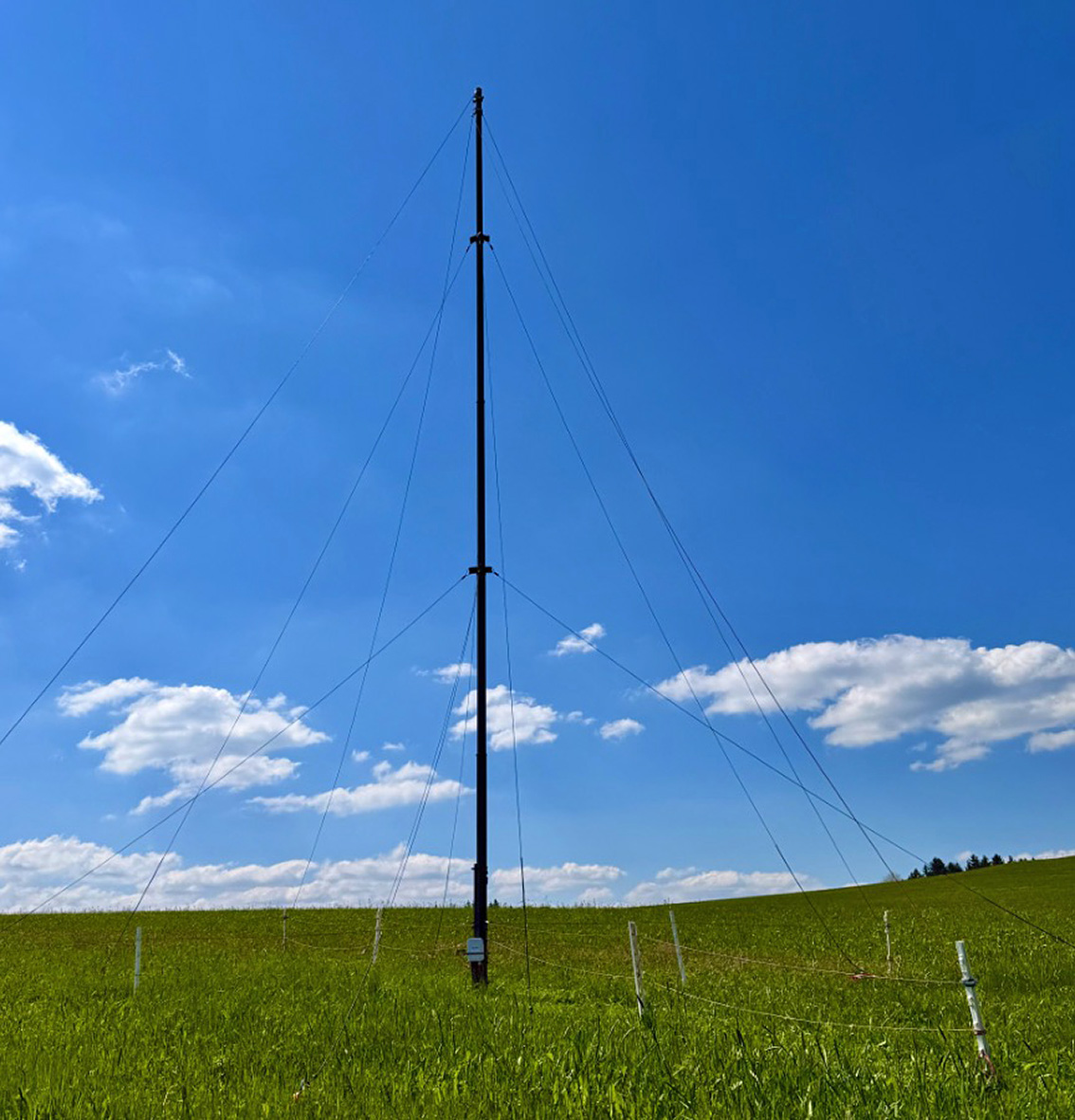
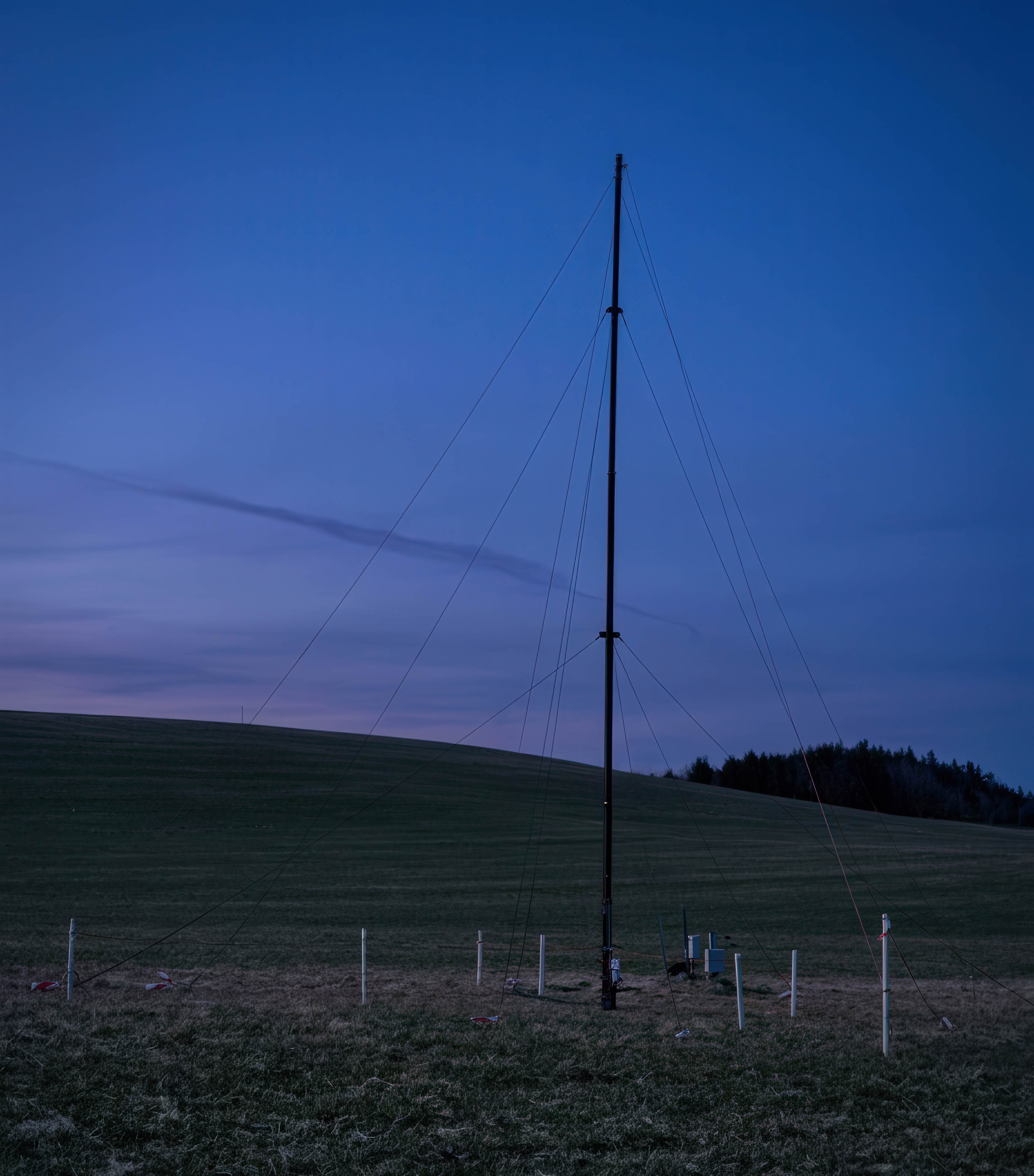
A few square metres of space, an area as free from local noise as possible – that’s all the AziLoop system needs.
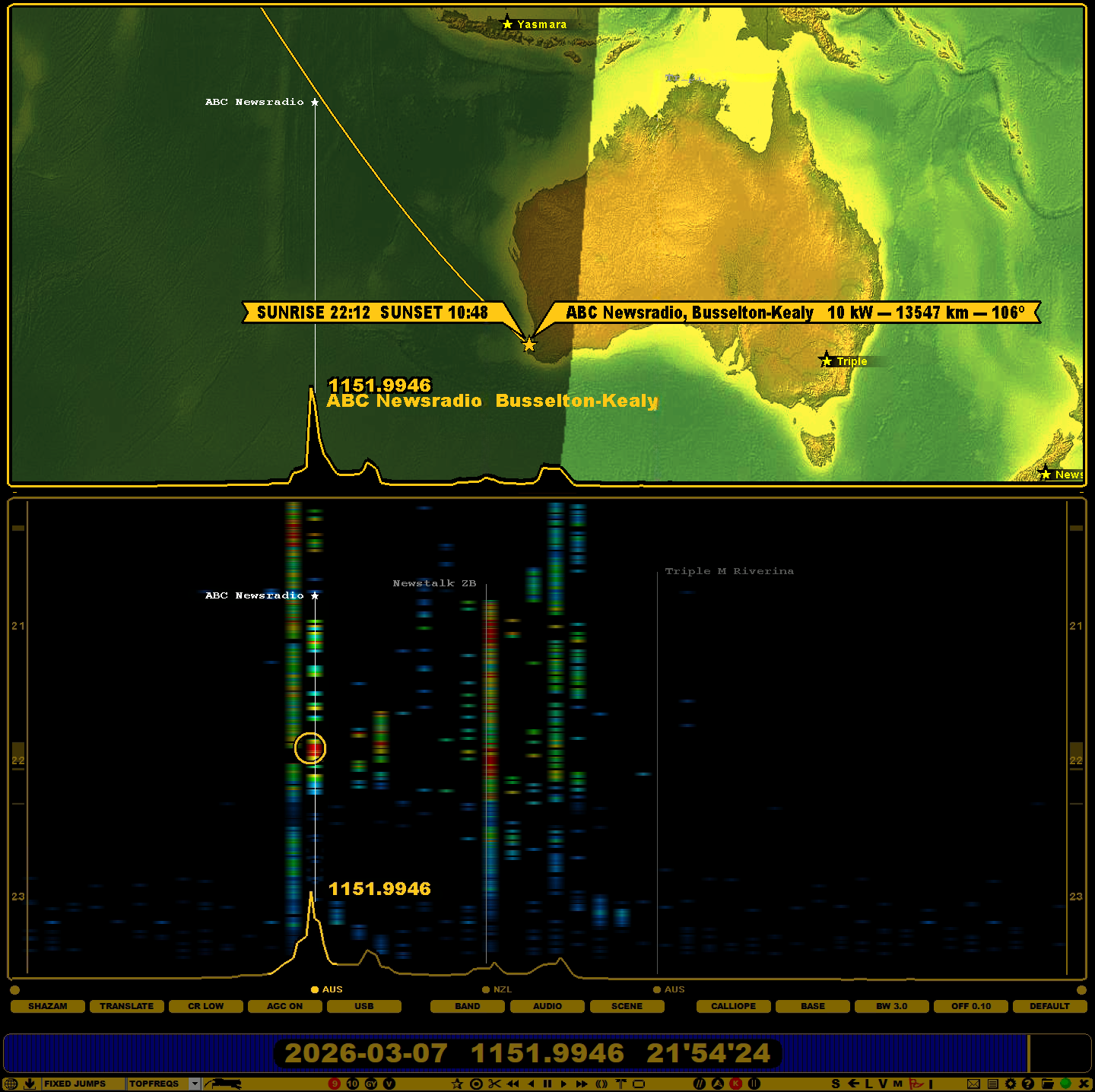
ABC Newsradio from Busselton on the Australian west coast, 13,547 km away – about 220 kilometres south of Perth – could be heard again yesterday evening at around 22:00 UT on medium wave 1152 kHz in Salzburg. Caution is advised when receiving the signal, as a small station from Taipei, Taiwan, can usually be heard on exactly the same frequency (1151.994) from 20:00 UT onwards.
 remotedx