AziLoop construction.

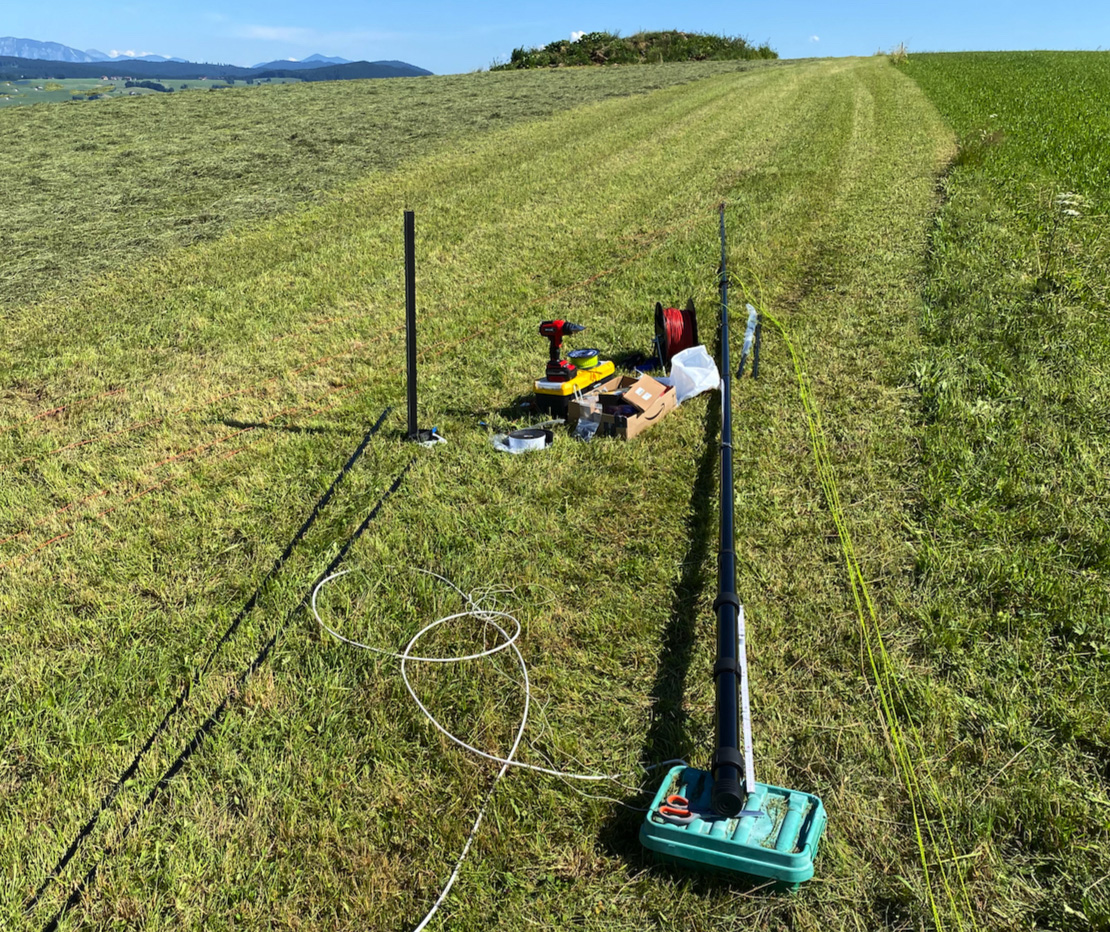
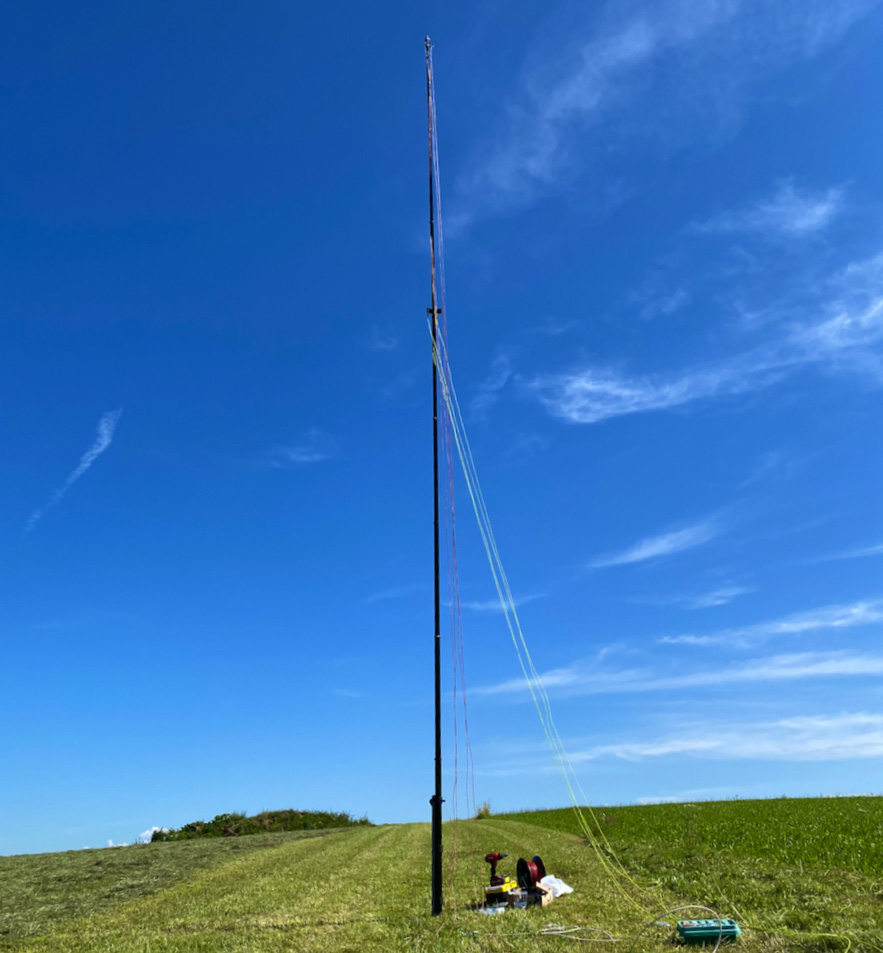
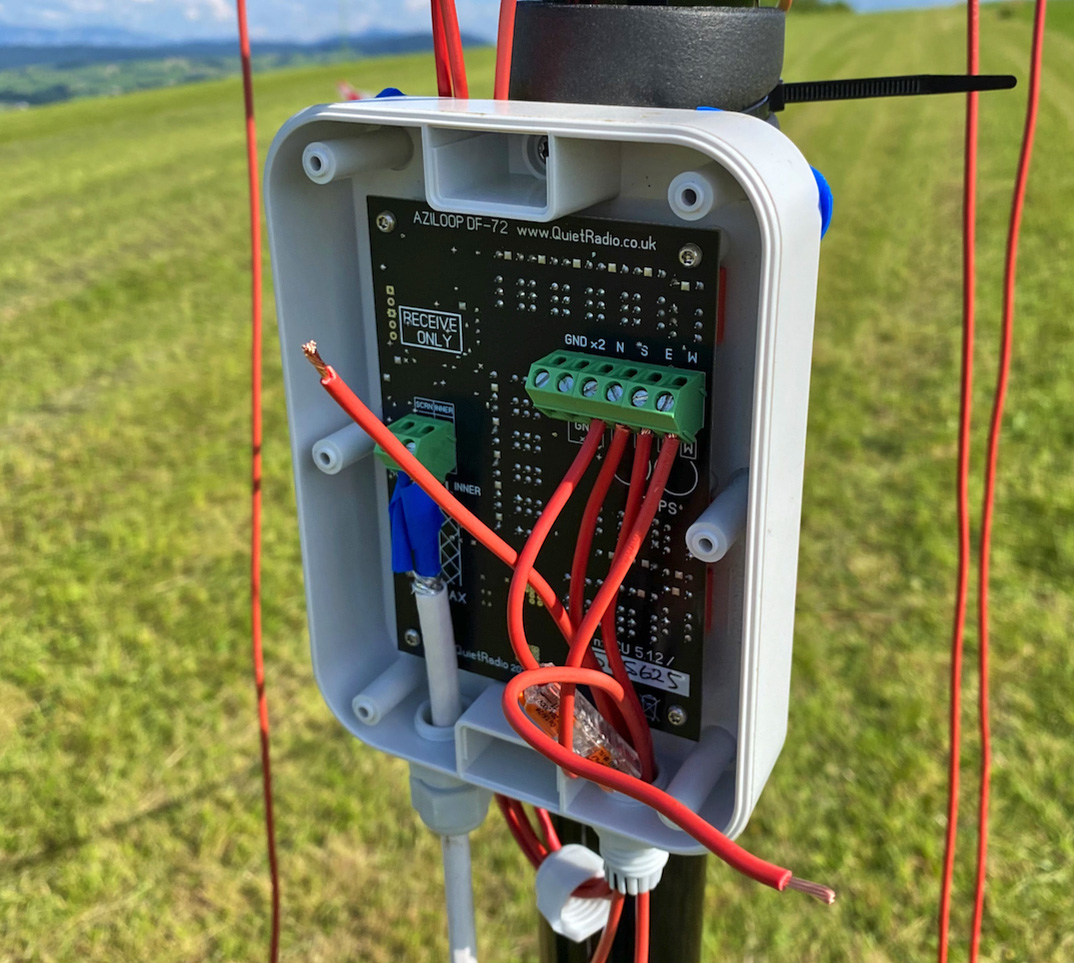
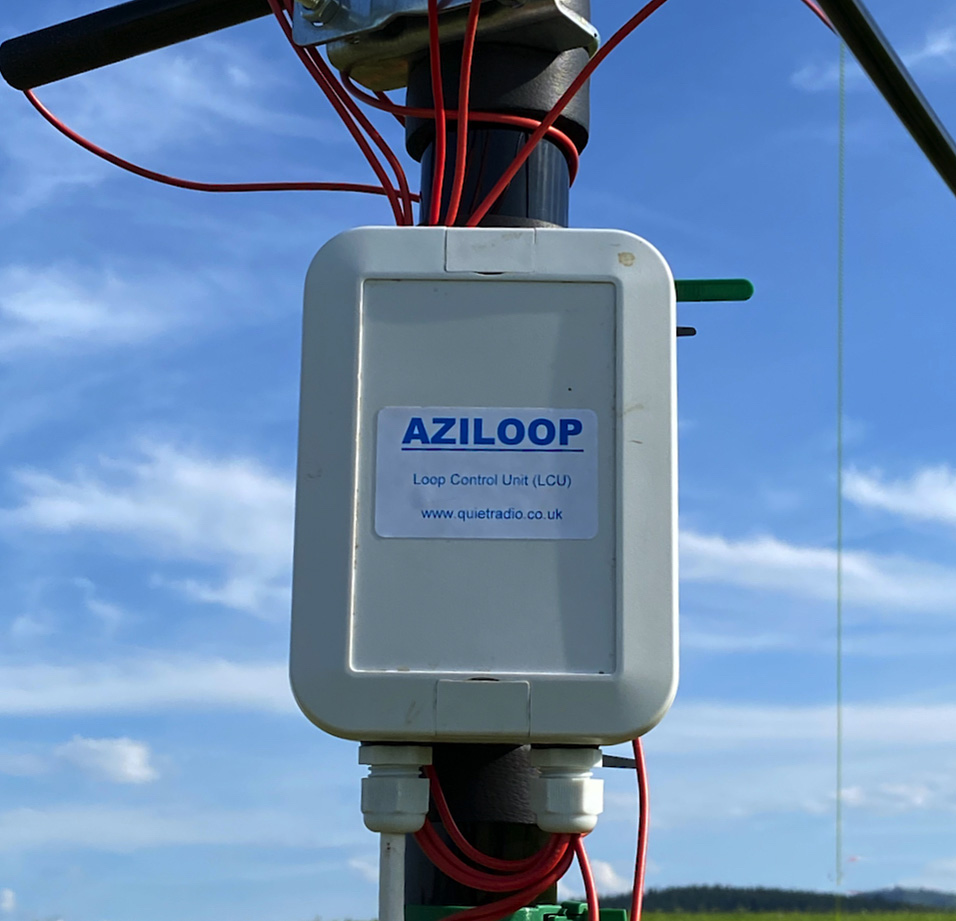
Now the boom arms and loop wires, as well as the radials, are all laid out and finally the Loop Controller Unit (LCU) Box is mounted. Install with the thin sides facing the midday sun. The case is weatherproof and UV resistant so needs no further protection. The LCU is powered and controlled via the signal coax. No control line from the station is necessary! The loop wires and radials are now connected in the box, the coaxial cable is connected directly, and the weatherproof housing is screwed shut. My AziLoop antenna is finished!

AziLoop construction.

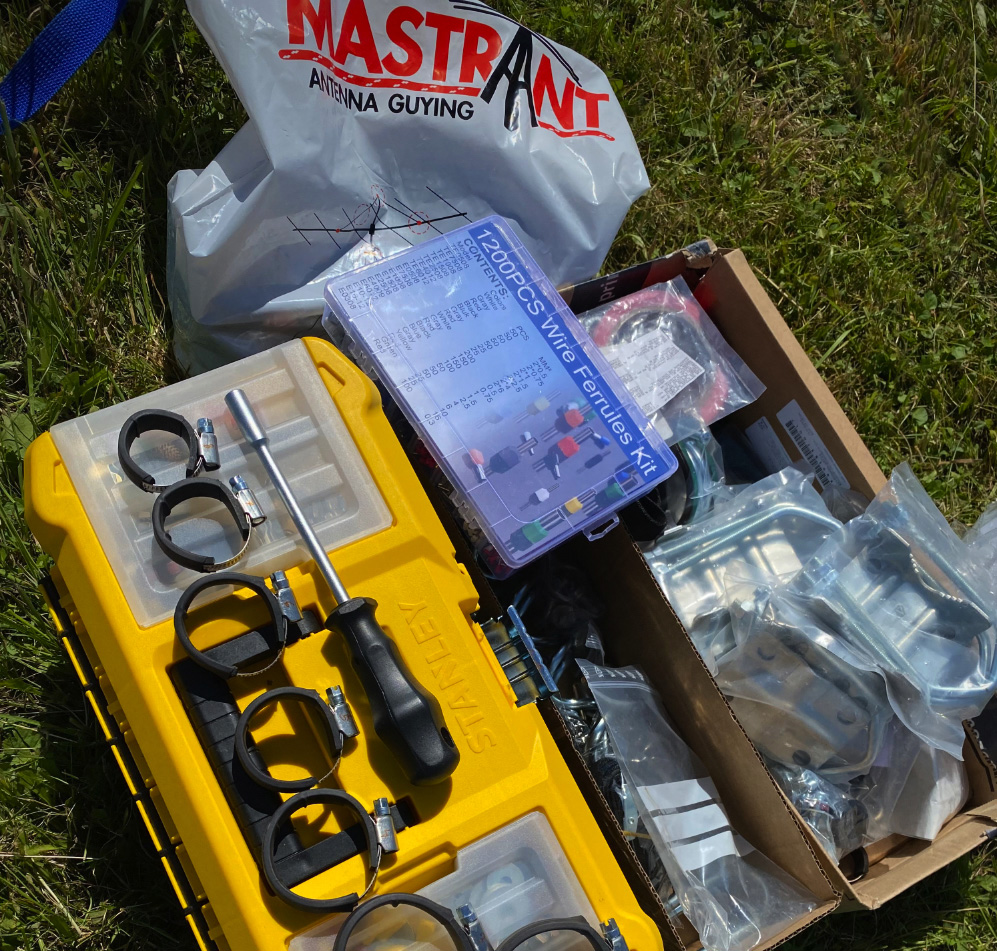
The most difficult part of the entire assembly was finding fasteners for the boom tubes. I used four “JBL 63 cross parallel clamps” from UKW-Berichte, a renowned German company that also sells all kinds of antenna accessories. These clamps are inexpensive and perfectly suited for the 4-meter Spiderbeam boom tubes, of which I only used 3 meters. It is important to place foam rubber under the clamps everywhere to protect the mast and NEVER tighten the clamps too much. It is better to tighten them one turn too little than one turn too much. I inserted the AziLoop radials directly into the tubes and secured them at the front end with small duplex clamps to hold the wire in place. I used insulated 1.5 mm² electrical wire for the entire antenna, as there is no significant mechanical stress here. If the wire proves to be mechanically vulnerable, I will replace it in the fall with the high-strength wire also used for the Beverage antenna.

AziLoop construction.

The guy wire – MASTRANT R 3mm – and clamps are from Mastrant, a reliable partner for antenna construction. The lower guy belt is actually intended for the Spiderbeam 14m HD fiberglass pole, but can be used on the 12-meter pole after the first 5 elements. Since I only use 8 meters of the pole, it is securely guyed despite the low load. The 8-meter mast can be easily assembled lying down and set up by one person. It is important to install the wires for the loops and the upper attachment points as well as the guy belt. And make sure that all wires and guy lines are correctly positioned before setting up.

AziLoop construction.

I have started setting up my Aziloop DF-72 antenna system. It was important for me to be well prepared. There are good sources online for carrying out a project like this on your own, even without much knowledge of antenna construction. The most important elements are my 12 Meter Spiderbeam HD Fiberglass pole with clamp set and guy belt and the boom elements, also from Spiderbeam. These are high-quality products that don’t cost much more than ‘cheap’ components.

AziLoop.

A few days after placing the order in Germany, my Spiderbeam 12 meter fiberglass pole HD and the four 4 meter fiberglass tube for the arms arrived here in Salzburg for setting up the AziLoop antenna. I can highly recommend this brand; everything looks very well thought out and robust, at a very good price – and with excellent support before purchase!

AziLoop.

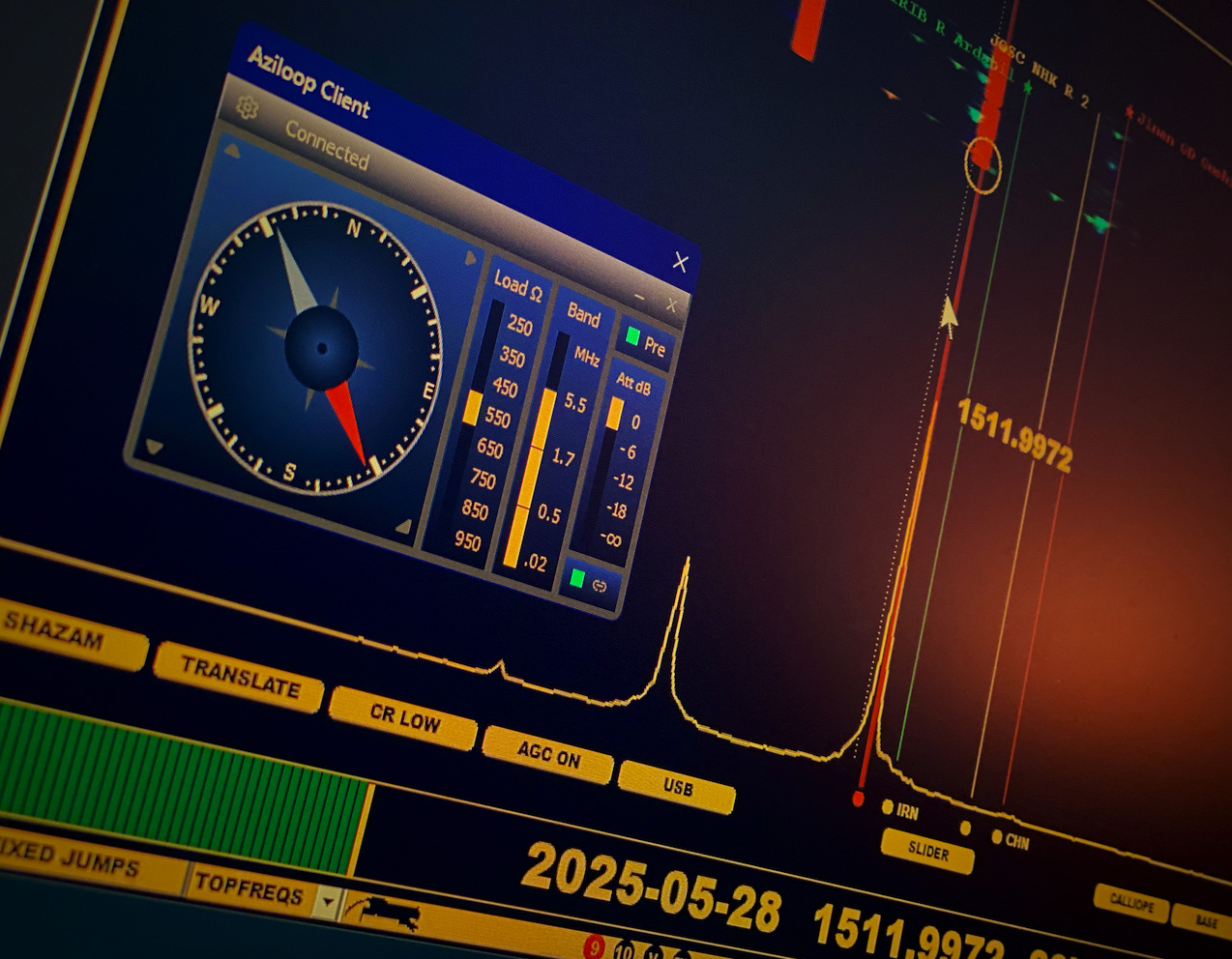
For a few days now, I have been testing the small AziLoop electronics, still with short wires and without a pole, to learn how it works. The server in the small ‘Common Interface Unit (CIU)’ – i.e. the interface that sends the control signals to the antenna box and receives the antenna signal – is equipped with a small, independent and very economical server. This server connects to my shack 75 km away, runs extremely stable and is accessible within a second. I have already colour-coordinated the client interface to match my Jaguar software. So far, the test has been without any problems.

AziLoop.

AziLoop is running, the control unit can be controlled via the long coaxial cable, and everything is technically perfect. Now I can take my time learning the app for the server and client and get everything I need in the next few weeks, except for the Spiderbeam mast, which I will pick up at the HAM RADIO exhibition in Friedrichshafen.

AziLoop.

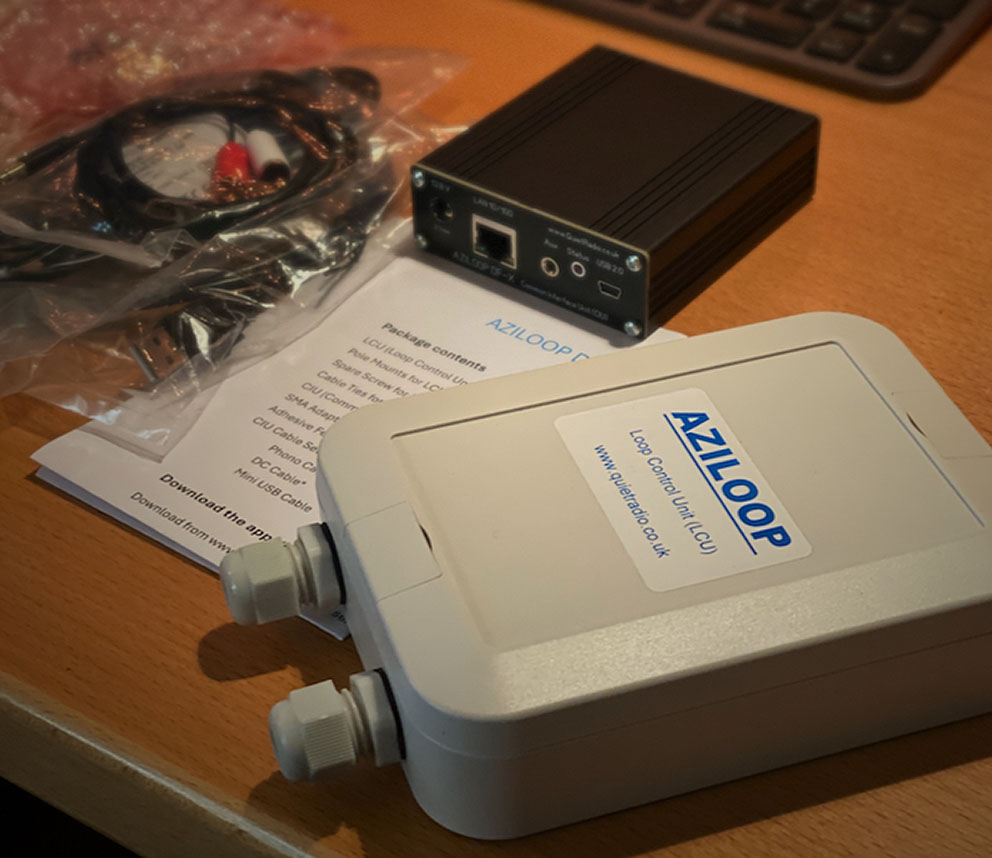
Today, the AziLoop system arrived from the Kingdom in Salzburg. To test the system, it will be connected at the station over the next few days. The very long coaxial cable feed line in particular needs to be checked. All other functions via the Internet can also already be tested. The mast system will be set up after the HAM RADIO fair. https://www.quietradio.co.uk