And this morning, instead of the beach on Chuuk in Micronesia, it was cold weather at the Alfred Wegener Institute’s (AWI) Neumayer III polar research station in Antarctica. DPOGVN could also be received on 1,840 kHz early this morning here in Salzburg in FT8 digital mode.
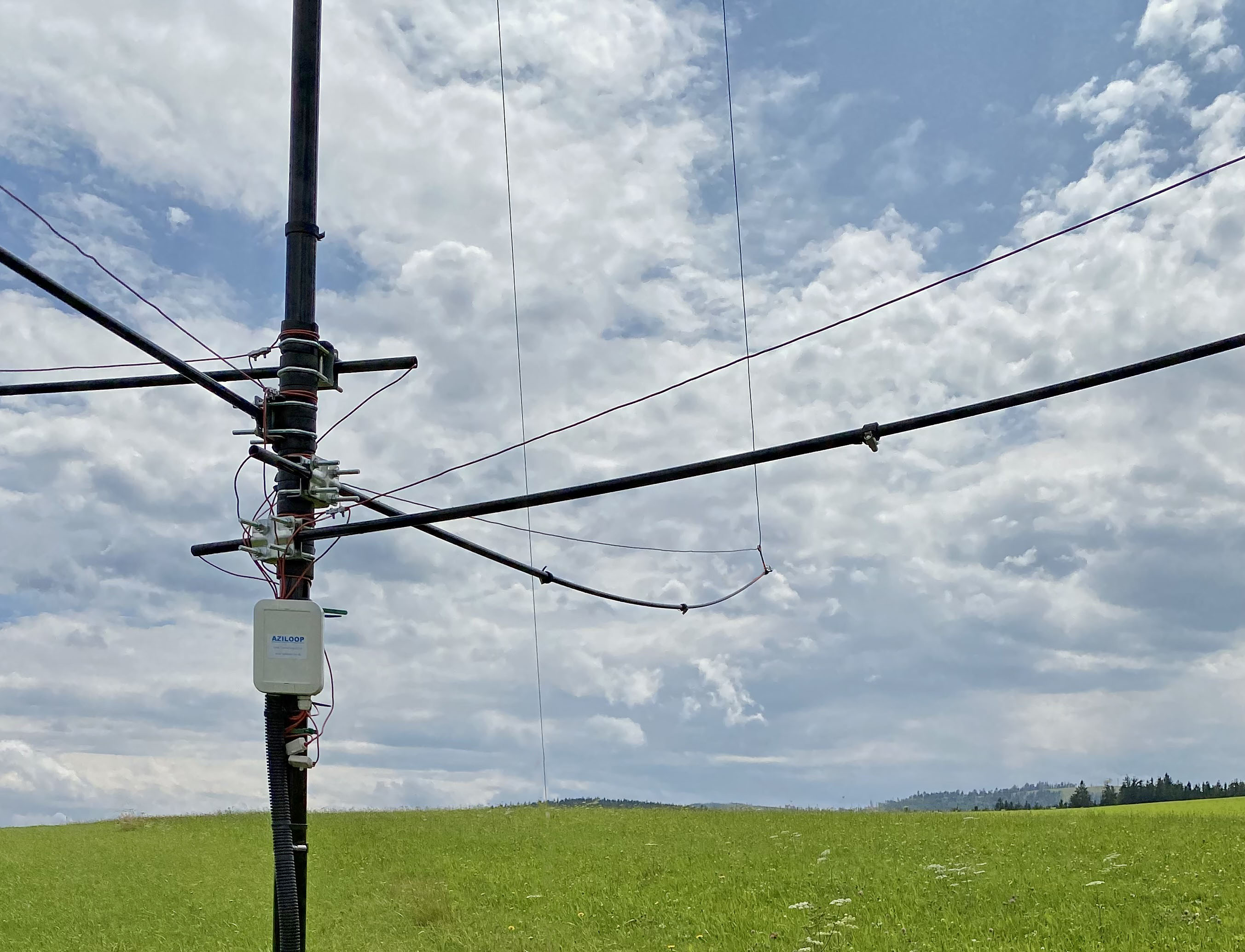
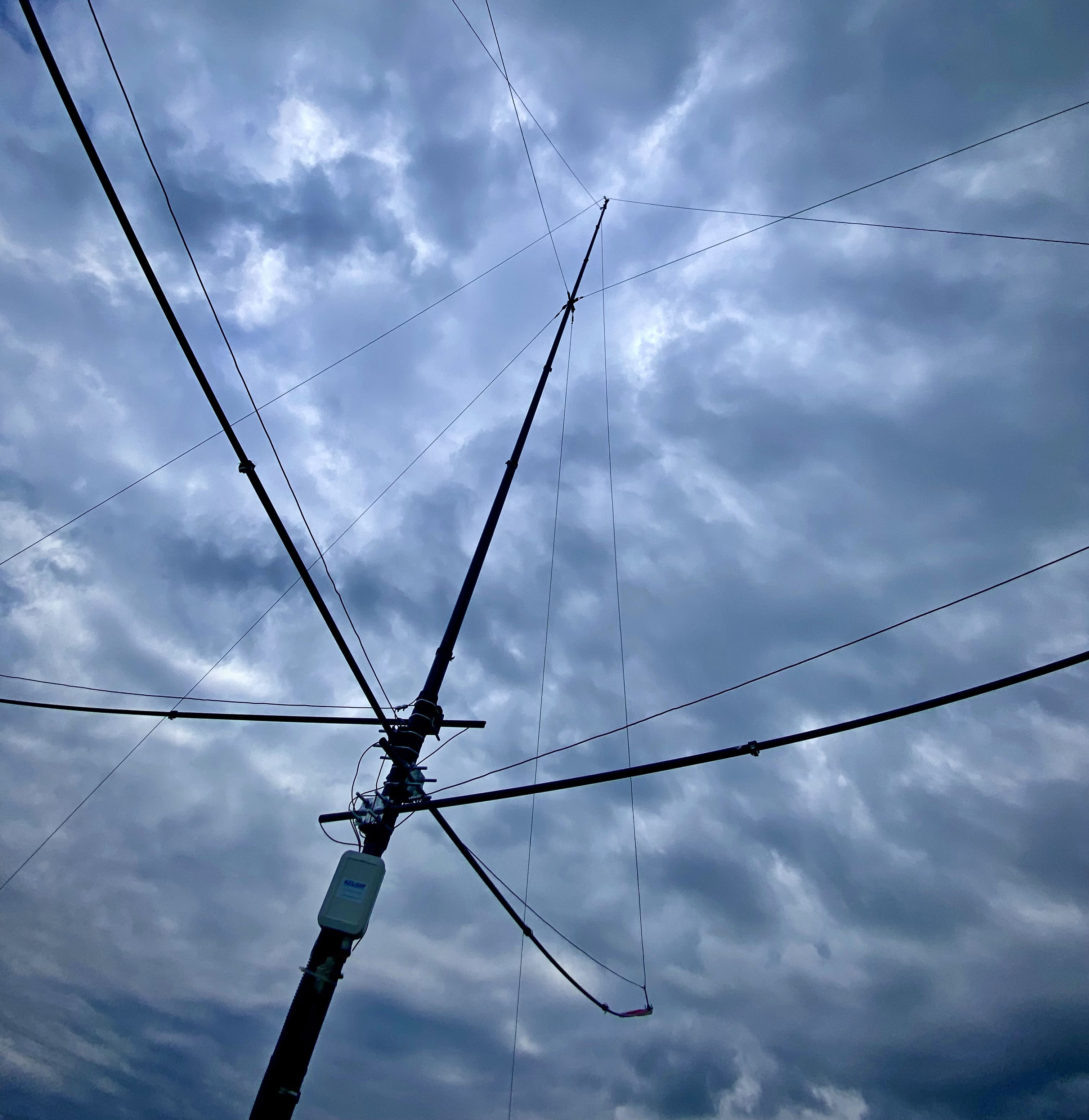
Although I hold an amateur radio license as OE2CRM, I am only interested in receiving Broadcast stations. Nevertheless, I use a small Web-888 receiver from hamparts.shop to receive FT8 signals on 160 meters (1,840 kHz) and study propagation. Yesterday evening, I managed to receive the DXpedition V6D from Micronesia here in Salzburg using the AziLoop antenna. Mediumwave signals from the Pacific!
The reception of mediumwave signals from Asia is now getting better and better. Yesterday evening, September 24, I was able to receive numerous amateur radio operators from Japan transmitting on 1.8 MHz—close to the mediumwave broadcast band—in FT8 digital mode here in Salzburg. AziLoop, 40°.
Yesterday evening, unexpected first signals fromJapan were heard on the mediumwave band in Salzburg, some with very good signal strength. A Japan expert was able to translate the weather report for Osaka and Kobe for me (over 34 degrees Celsius), and the heatstroke warning should not be forgotten.
1242 1959 J JOLF NBS Nippon Hoso, Tokyo/Kisarazu (kan-tok) 9359 km 1008 2002 J JONR ABC Asahi Hoso, Osaka/Takaishi (kns-osk) 9211 km 1134 2012 J JOQR NCB Bunka Hoso, Tokyo/Kawaguchi (kan-tok) 9308 km 1350 2030 J JOER RCC Chugoku Hoso, Etajima/Okimi (chg-hir) 9072 km
On the evening of September 13, 2025, beautiful signals could be heard from all over Asia. India was represented at the end of the broadcast, followed later by China and the Philippines. I was able to hear NHK Okinawa at the start of the broadcast. DYVS from the Philippines could also be heard at the start of the broadcast around 2045 UT. Some stations—especially from China—have not yet been identified, but it shows that the Asian season is now really beginning. I received all signals with my AziLoop, mostly at 90° (India) and then at 60° (China, Philippines).
810 1715 IND Akashvani, Rajkot A (GJ) 5794 km 846 1705 IND Akashvani, Ahmedabad A (GJ) 5898 km 891 2159 THA Sor. Wor. Thor., Saraburi (srb) 8673 km 918 2200 CBG National Radio of Kampuchea, Phnom Penh (pph) 9200 km 972 1730 KOR HLCA KBS Hanminjok Bangsong 1, Dangjin (ccg) 8514 km 972 1655 IND Akashvani, Cuttack A (OD) 7084 km 1107 1640 CHN Shinjan Qazaq Radiosu, Hutubi/XJTS631 (XJ) 5494 km 1116 2100 CHN CNR5 Taihai zhi Sheng, Shaowu/NRTA751 (FJ) 8782 km 1125 2054 J JOAD NHK Radio 2, Naha/Tomigusuku (kyu-oki) 9519 km 1143 1730 TWN Taiwan Ch¸ Yuyeh Kuangpo Tientai, Baisha (PG) 9224 km 1143 1625 IND Akashvani, Ratnagiri (MH) 6416 km 1206 2010 CHN Yeonbyeon Joseonmal Bangsong, Yanji/Longjing (JL) 8165 km 1206 1636 IND Akashvani, Bhawanipatna (OD) 6905 km 1233 2048 PHL DYVS FEBC Sweet Voice of Salvation, Bacolod (noc) 10564 km 1251 2025 CHN Shandong GD Xiangcun Guangbo, Jinan (SD) 7978 km 1359 1745 CHN CNR1 Zhongguo zhi Sheng, Tacheng=Qoqek (XJ) 5086 km 1377 2100 CHN CNR1 Zhongguo zhi Sheng, Zhengzhoui/Xingyang (HE) 7899 km 1494 2006 PHL DWAR Abante Radyo, Valenzuela/Caloong (ncr) 10075 km 1530 2055 CHN Zhejiang GD Xinwen Guangbo, Hangzhou (ZJ) 8698 km 1530 2110 PHL DZME Kinse Trenta, Obando/Panghulo (bul) 10077 km 1539 2115 CHN CNR1 Zhongguo zhi Sheng, Golmud (QH) 6552 km 1566 1730 KOR FEBC Korea Jeju, Jeju (jej) 8802 km 1593 2057 CHN CNR1 Zhongguo zhi Sheng, Changzhou (JS) 8576 km
The mediumwave transmitter of the National Radio of Kampuchea, from Phnom Penh – Kandal Stueng, can now be heard clearly in Salzburg on 918 kHz at 22.00 UT at the beginning of this fall. AziLoop, 80°.







 remotedx